 School Archives
1883–1915
The first high school classes
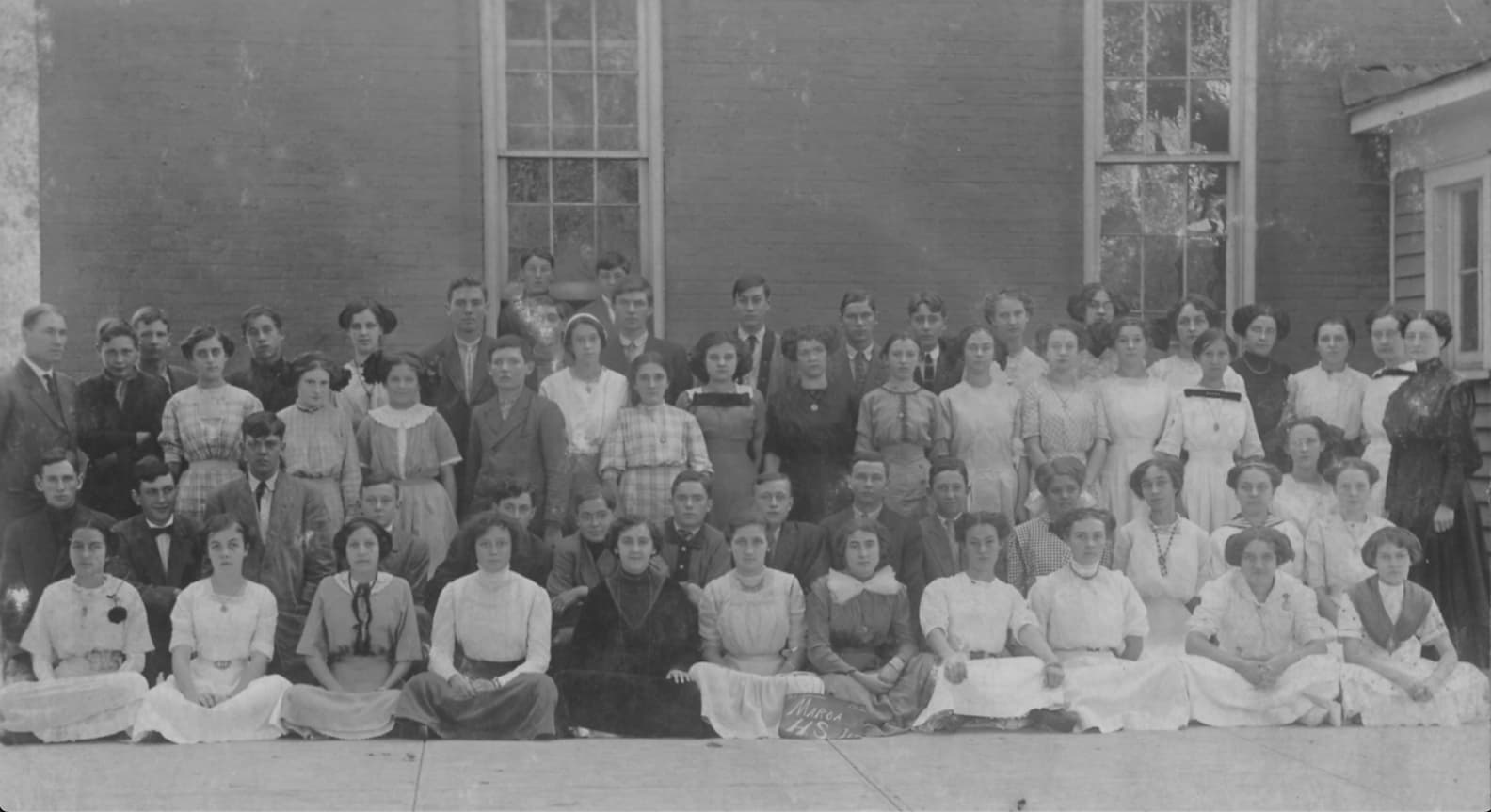
The earliest available records indicate that Maroa had a high school organization by about 1883. The first graduating exercises were held in the old Methodist Episcopal Church. Members of the class were May Covault, Clara Jones, Ella Reed, Emanuel Bennett, Estella Conover, Ella Tozer, Fred D. Axton, and Benjamin F. Walter. Their class motto was “Labor Conquers All Things.”
The high school and grade school initially shared both administration and facilities. When a new school building was erected in 1914–1915, the grade school occupied the first floor and the high school used the second.
1920–1931
A community high school
In 1920, the high school was organized as Community High School District No. 151 with a separate Board of Education. It continued to use the second floor of the grade school until growing enrollment threatened the school’s standing because of limited space.
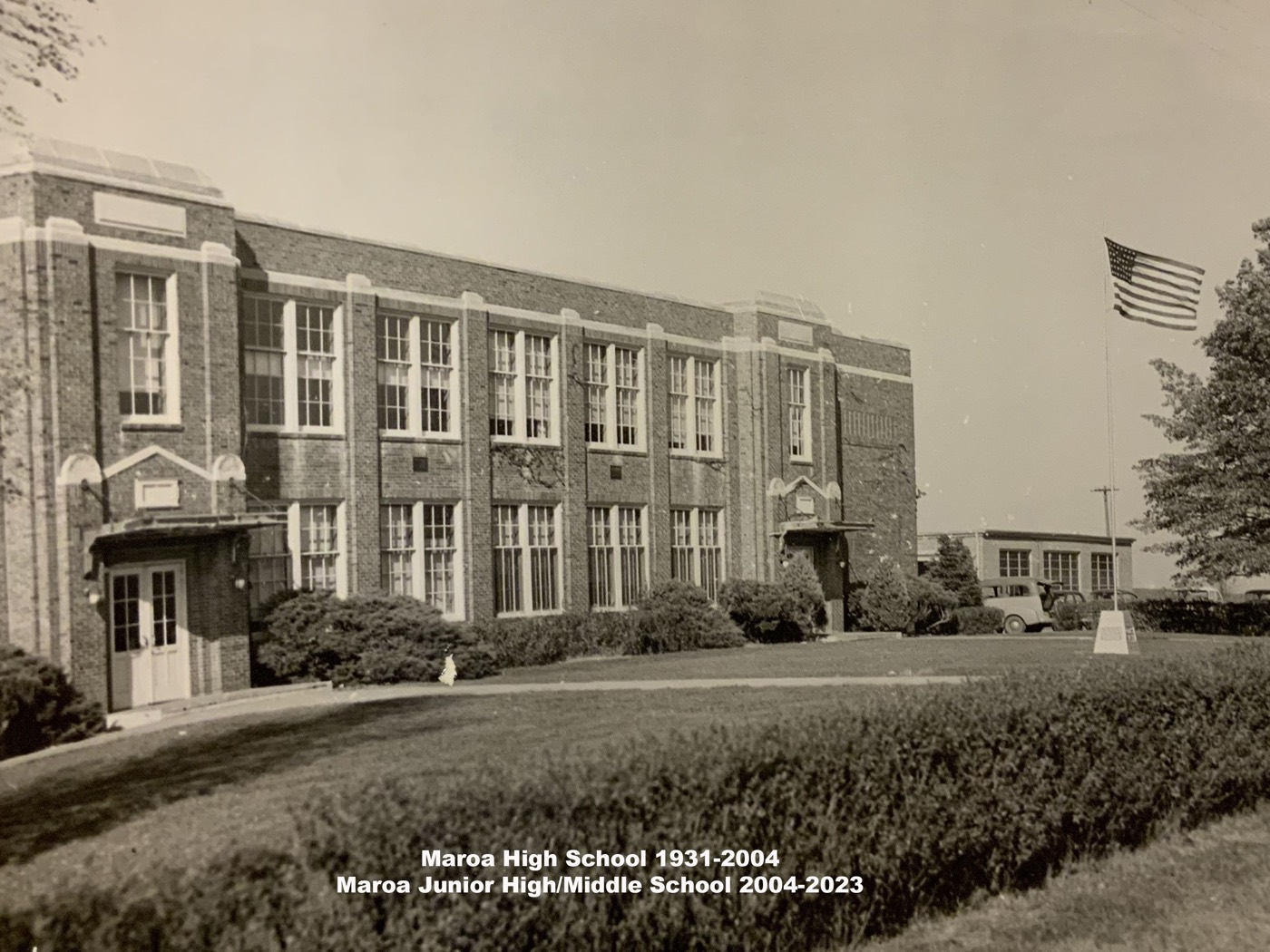
A new high school building was completed in 1931 and opened that March with an enrollment of 146. The building cost $70,000, with additional equipment bringing the total investment to approximately $90,000. A commercial department was added the following year. The new building and equipment attracted students from outside the district, and enrollment soon reached between 150 and 160.
1936–1940
New facilities and programs
The south basement and shower rooms were completed in 1936–1937 at a cost of $20,000. A full-time agriculture department was added in 1937–1938, along with a sound motion-picture projector. A filmstrip projector was given to the school in 1939.
About 1940, Principal W. D. Keyes and the student Radio Club built and installed the school’s first public-address system. Constructed at the school, it cost approximately $80.
World War II
School during wartime
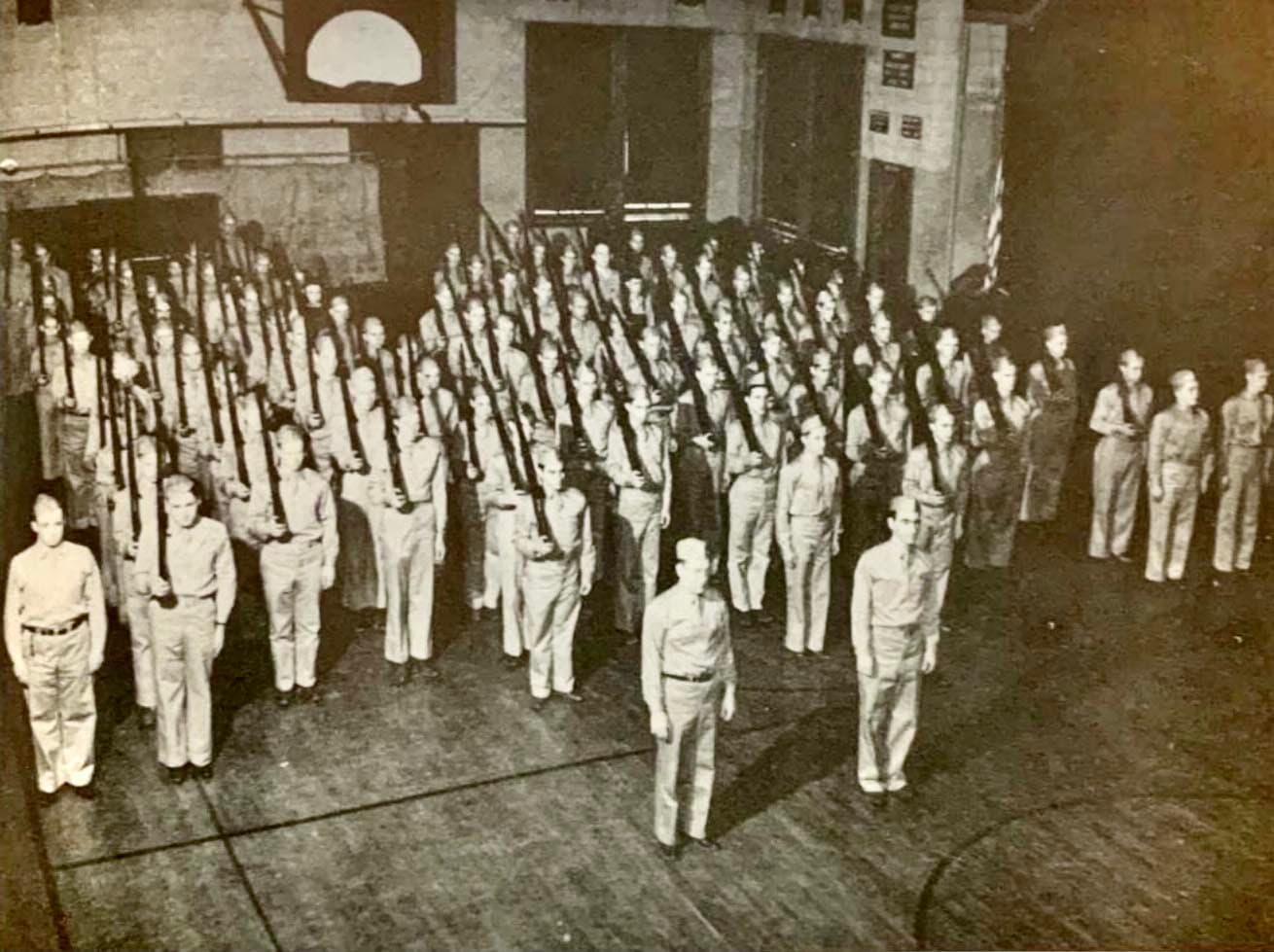
World War II brought sudden changes to school life. Transportation was curtailed to essential travel between home and school, and side routes and extra trips were discontinued. The school term was shortened to eight months, with longer school days, to help address the shortage of farm labor.
Military training was introduced through the government-sponsored Victory Corps. Principal W. D. Keyes and agriculture instructor Melvin J. Nicol served as instructors. Radio, refresher mathematics, and pre-flight aeronautics courses were also introduced during the war years.
1946–1948
Curriculum growth and consolidation
Chemistry was added to the curriculum in 1946, supported by approximately $3,000 in new equipment. Other additions during the 1940s included a three-year home economics course, Spanish, and expanded commercial offerings. The Maroa High School Band began around 1946–1947 after the high school orchestra was discontinued; Mrs. D. M. Dewhirst had directed the orchestra for many years.
As neighboring districts rapidly formed community units and annexed territory, Maroa’s high school and grade school districts were consolidated under one Board of Education. Maroa’s original high school district covered about forty sections and had recently annexed approximately thirty sections of non-high-school territory. The new unit district encompassed roughly eighty sections.
W. D. Keyes, formerly the high school principal, became superintendent of the newly formed unit. D. M. Dewhirst retired after twenty-seven years as president of the High School Board of Education, and Ambrose Hill became the first president of the Unit Board.
1952–1954
Expansion for a growing enrollment
By the early 1950s, a rapidly increasing school population made another building program necessary. After several preliminary attempts, voters approved a $296,000 construction program in 1952.
High school work included a new farm shop and laboratory classroom, an industrial-arts shop and drawing room, and two additional general classrooms. Construction had progressed enough for the new space to be used by the fall of 1953. Beginning general-shop courses were added to the industrial-arts program. The high school portion of the project cost approximately $92,000.
Several new business machines were installed in 1954, making an Office Practice course possible. The department’s equipment included an electric typewriter, calculators, adding machines, duplicators, a Varityper, and an offset press purchased largely through student support. To the Centennial Book’s author, these additions gave Maroa High School a thoroughly modern commercial program.